
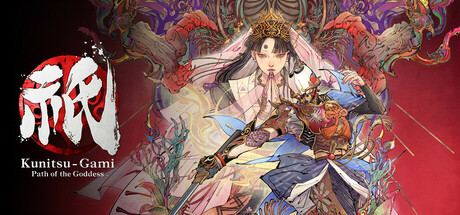
Kunitsu-Gami: Path of the Goddess
A distinctive Japanese-style tower defense masterpiece developed by Capcom, with the background of a shrine maiden saving a mountain village covered by defilement. Exquisite art design, excellent control feel, though limited by the tower defense framework but full of creativity, an underrated excellent indie game.
Art Appreciation
Rating Breakdown
Deductions
The innovative, overpowered protagonist upsets the tower defense balance. The stages look varied, but in the later game they still start to feel repetitive and a little dull, partly because of the units. Personally I think innovating in tower defense is hard: without more elements to support richer gameplay, Capcom has already done all the innovating it could.
There's a currency called crystals that you easily run short of, so you end up grinding crystals, a highly repetitive process. Some collectibles take five or six playthroughs to complete, yet the stages are identical with no tweaks at all, which is dull for completionists.
Some late-game units are hard to use; lots of players ask how on earth the Onmyoji is supposed to work. And by the time the Onmyoji appears in the game's progression, you can clear everything without using it at all, which isn't very sensible balance.
The units aren't especially well balanced. Some arrive only very late and barely get used, and once you settle into your routine you'll find some units you never touch, and it doesn't matter at all. Also, this isn't traditional tower defense: the protagonist you control can roam around killing enemies, and if you're good you can turn the battle around with him alone, which dilutes the point of tower defense.
Highlights
Capcom, the king of rehashes, quietly launched a new IP, a Japanese-style tower defense game, and a very polished one. In terms of art and pricing, this has the foundation of a big-budget title; reinventing the genre was a must, hence the abundance of creativity. Still, achieving a revolutionary result really isn't easy. I call it a tower defense blockbuster, but in practice the game is stuck somewhere between a tower defense game and a blockbuster, which is probably why it draws criticism.
The game has boss fights, and they're not easy, each boss with its own character. Boss fights also require bringing villagers (i.e. units), but that doesn't mean much; this part is docked together with balance.
A one-of-a-kind tower defense blockbuster, full of creativity. What was the last game to earn the title of tower defense blockbuster? Plants vs. Zombies?
The game feel is excellent, hard to believe this is tower defense; after all, that superb feel comes straight from Monster Hunter.
The "tower" in this game is the shrine maiden Yoshiro, and the tower coming under attack is the central drama of any tower defense game. When Yoshiro is attacked, she immediately cries out "助けて!" ("Help me!") in a gentle voice, and you panic at once: how could you not rush back to save her? Total immersion.
Highlights
Japanese style, shrine maidens, shrines, ukiyo-e: the art is fantastic. Right after finishing it, I told a friend in Japan that I want to buy one of those cheap abandoned shrines in the Japanese countryside.
Whether it's the shrine maiden, the protagonist, or the yokai big and small from the Night Parade of One Hundred Demons backdrop, the strength of the art design shows everywhere.
Highlights
A small-scale game: a shrine maiden saves mountain villages covered in defilement, and there's not much to say on the story front.
Deductions
The stages and boss fights each differ a little and clearly strive to innovate, but often after a few stages I'd want a break. This isn't a simple mobile game like Carrot Fantasy, and I have to say Carrot Fantasy is actually pretty addictive; you can't put it down. Adding more gameplay content would make this game more fun. For example, after saving a village you're supposed to rebuild it, yet that's only a collectible; this could have been expanded, even into a budget Cities: Skylines, instead of staying boxed into the tower defense framework.
Highlights
The incentive for a second playthrough is well judged and introduced naturally, making it practically a must, but full completion takes five or six playthroughs, which, as mentioned above, is rather dull.
Everything that should be there is there, and it naturally motivates you to start a second playthrough.